
What's included
- Repairing or replacing vinyl siding damaged by storms, mowers or impact
- Replacing swollen or rotted hardboard and wood siding
- Fiber cement siding repair and installation
- Trim, corner boards, J-channel and flashing around windows and doors
- Checking and replacing house wrap behind damaged areas
- Priming and painting new wood or fiber cement to match
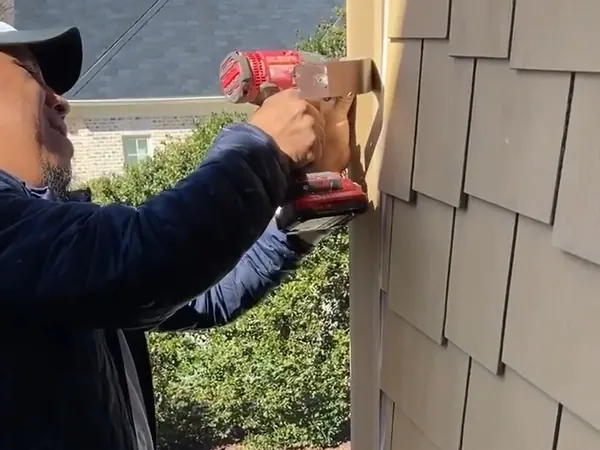
Our process, step by step
- Inspect. We find the damaged boards and check behind them for moisture and rot in the sheathing.
- Estimate. We give you a written scope with options, whether that's patching sections or replacing a wall.
- Remove. Damaged siding comes off carefully so the surrounding boards aren't damaged.
- Repair what's behind it. Sheathing, house wrap and flashing get repaired or replaced as needed.
- Install. New siding goes on with correct overlaps, spacing and fasteners.
- Seal and finish. Joints are sealed where required, and paintable siding is primed and painted.
Prep and materials
Siding that's installed wrong lets water in, and in our humid climate trapped water turns into rot fast. We pay close attention to flashing at windows and doors, clearance from the ground and roof lines, and leaving room for vinyl to expand in the summer heat. On older homes we'll talk honestly about matching: vinyl colors and wood profiles change over the years, and sometimes the best match comes from moving boards from a less visible side of the house.
Why quality matters
Siding is your home's first line of defense against weather. A careful repair protects the structure behind it. We take fewer jobs so each one gets inspected properly, not just covered up.
If we find rotted sheathing or wet insulation behind the siding, we'll show you photos and explain the options before going further. You won't get a surprise bill, and the problem won't get hidden behind new panels.
Siding types we work with
- Vinyl: the most common siding in newer Wake County subdivisions. It doesn't need paint, but panels crack, loosen in wind and fade unevenly.
- Fiber cement: durable and fire resistant. It holds paint very well, but cut edges must be sealed and joints kept caulked.
- Hardboard: common on 1980s and 1990s homes. It swells and crumbles when water gets in, especially at the bottom edges.
- Wood: found on older homes. It's repairable board by board when it's primed and painted properly.
Signs your siding needs attention
Look for boards that are swollen, soft, cracked or bowed. Watch for paint that won't stay on one area, gaps at corners and windows, stains below windows, or panels that rattle in the wind. Any of these can let water into the wall, and it's much cheaper to fix early.
Warranty
Siding repair and installation are covered by our 1-year workmanship warranty. Licensed and insured on every job.